leadership
What Does a Founding Engineer Actually Do? The 'Founding' Is Misleading
June 11, 2026 · 6 min read
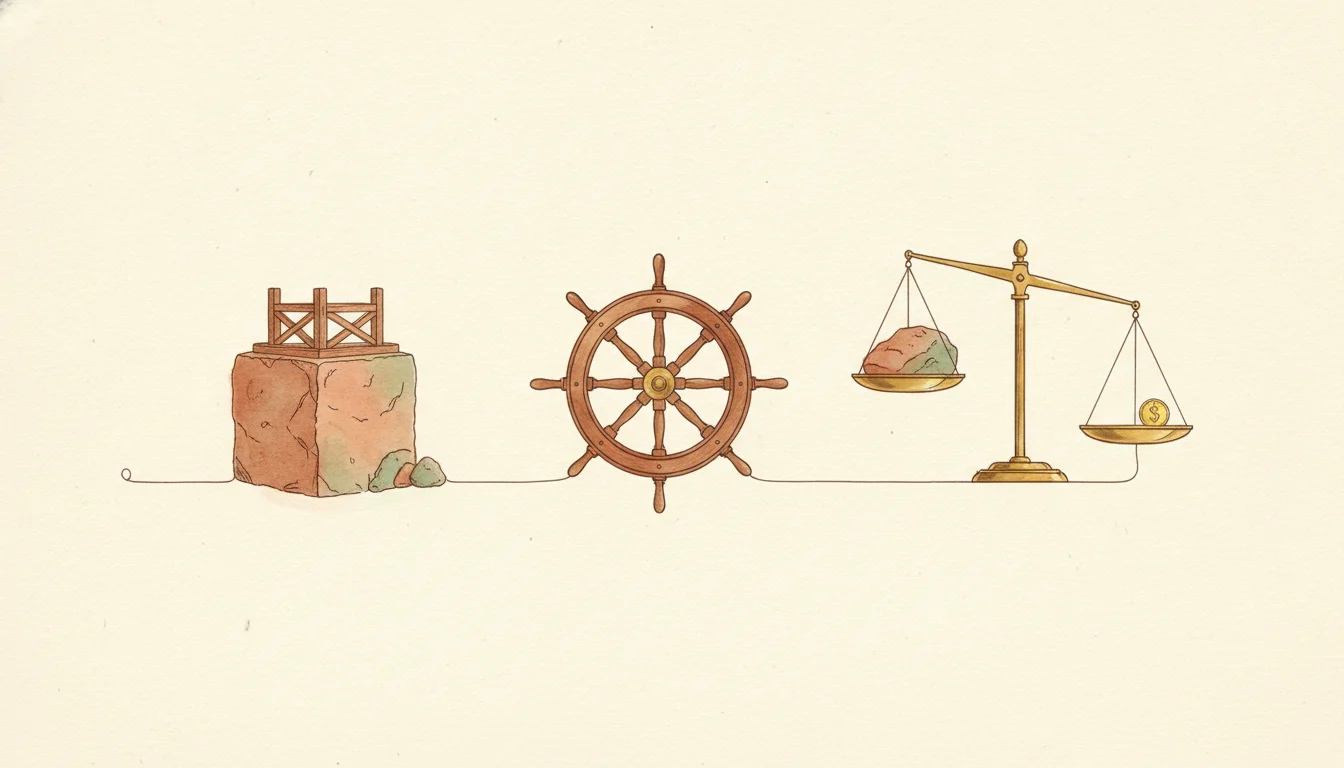
Over the last two years, one title has risen to the top of startup job posts: founding engineer. Sources that watch the industry closely, like The Pragmatic Engineer, describe it as one of the most sought-after technical positions of 2025, and someone even went as far as calling it Silicon Valley’s biggest catch. But all that shine around the title has also created a real confusion about what it means. Most people get the founding engineer wrong.
Two mistakes circulate at once. The first is reading the “founding” in the name and assuming the person is a founder. The second is reading “engineer” and assuming the job is mostly writing code. The truth sits outside both. Drawing on industry data and the role’s actual definition, this piece tries to clear up what a founding engineer really does.
”Founding” Does Not Mean Founder
This is where the biggest mistake lives. The “founding” in the title says the person is part of the founding team, not that they are a founder. A founding engineer is often the company’s first engineer, sometimes its first employee. But they do not sit in the same seat as the founders.
The clearest way to see the difference is the numbers. According to industry data, founders typically own somewhere between 20 and 50 percent of the company. The first engineer’s median equity is around 1.5 percent, and by the fifth hire it drops to about 0.33 percent. So the founding engineer takes a big risk, arrives as early as a founder, carries as much as a founder, but does not get a founder’s share. In return, they usually take a higher salary. That equation is the key to understanding the role: someone who works with a founder’s mindset without being a founder.
The Real Job: Not Code, but Owning the Product
The second mistake clears up here too. An early-stage startup has no separate product manager. So what is expected of a founding engineer is not just coding the work handed to them, but having an opinion about where the product should go. The shared emphasis across the sources that describe the role is this: there is no room here for a code monkey who only writes code.
In other words, a founding engineer’s day is not spent burning through a task list of “build this.” Deciding which feature is actually needed, and which one merely sounds nice, is part of the job. Technical decisions and product decisions merge inside the same person. So while the most visible part of the work is code, the real weight is outside the code.
MVP, Hypothesis, and Failing Fast
A founding engineer’s first concrete task is usually to build an MVP, the smallest working product that can test the startup’s core assumption. The logic is simple but unforgiving: test the hypothesis first, scale and add features if it holds, learn early if it does not.
That also means some of the code written is born to die. A feature, a flow, sometimes a whole direction can hit reality and go in the bin. That was the point in the piece where I wrote about how complexity quietly eats a product from the inside: being able to build fast and fail fast beats building perfectly and realizing too late. A founding engineer’s job is to keep that hypothesis loop spinning with limited resources and few people.
Why It Is So Wanted in 2025
There are two reasons the role has become this popular lately, and both point in the same direction.
The first is the economic climate. In the first half of 2025, startups across most areas leaned toward leaner teams and more cautious growth. In that environment, the founding engineer became the person who does the work of several with a single strong hire. Much from few became the spirit of the moment.
The second is tooling. AI tools like Cursor, Claude Code, and Copilot have noticeably increased what a single senior engineer can ship in a week. I described this before as AI being a force multiplier rather than a cheat code; the founding engineer is the most concrete expression of that multiplication. The direction is still human, but that human’s reach is far wider than it used to be.
The Other Side of the Coin
Up to here the role sounds appealing: arrive early, build a lot, steer the product. But to be honest, there is another side.
A founding engineer arrives as early as a founder, carries as much uncertainty as a founder, and often cannot even find anyone to approve their decision. They pick the wrong architecture, and they are the one sitting with the database that blows up at night. But when the company grows, they do not get a founder’s share. This is the role’s hidden invoice, and it is the part that needs to be seen clearly before the contract is signed. The appeal is real, but so is the price.
Conclusion: Not a Title, but a Position
A founding engineer is neither a founder, as the name suggests, nor merely a coder, as the job is assumed to be. The shared picture from the industry data is this: the first engineer who thinks like a founder without being one, who owns the product while their share stays limited.
Building my own small projects, I came to know the nature of this work, even if only from a distance: while building a product at the kitchen table, the thing that tired me most was not the code, it was answering the question “should I even build this” anew every single day. A founding engineer lives that with the weight of a company on top, often alone. To look at the shine of the title and miss the position behind it misleads both the person hiring and the person about to take it. The point is not the shiny word, but knowing what the real work and the real share underneath it are.