engineering
AI Is Not a Cheat Code, It's the New Power Steering
October 1, 2025 · 6 min read
The “Real Programming” Debate Never Ended
Stay in this industry long enough and you see the same fight come back in new clothes. From the days I printed my first “input” to the screen with QBasic to today, chasing data consistency in distributed systems, one question never changes: what is real programming?
Once, if you did not know Assembly, you were not a developer. Then C arrived and the line became “if you do not command the operating system, you do not count.” When IDEs grew and code completion entered our lives, some called it plain laziness. Today the same look has turned to AI and vibe coding. Many of my old-school colleagues are on the defensive, saying “ban it”, “this is not real coding.”
That defense will not stop the coming wave. Same as last time.
Factory Chimneys
No point painting a rosy picture, let’s be honest. AI changed the color of the competition. A textile factory once needed a worker at every sewing machine; automation replaced most of them with machines. A fully unmanned factory is still a utopia, but factories where ten operators do the work of a hundred are real.
Software is going through a similar break. Companies now want one person, with AI agents, to do the work a five-person team used to do. And they will get it. For a developer doing standard, easily replaceable work, the risk of being out of a job is a plain reality in front of us. Clawing out every line by hand will not be the life raft that saves you here; the stubbornness may slow you down enough to get you cut.
What Really Matters: Who Holds the Wheel
But there is a fine and vital line here. However good vibe coding is today, it is not a magic wand. In complex, many-layered architectures especially, the hacky moves a senior reaches for to save the moment are something AI cannot yet pull off cleanly on its own.
For someone who does not know how to code, setting out with “I can build anything with AI” is a big illusion. They might ship a simple interface, sure. But once data consistency, scalability, and security enter the picture, they will most likely produce a system that works but is ready to blow under the hood.
A small note: I am reading this as of today. By the time this is published, much better models may come out and make this paragraph wrong. Fine. I am still speaking from today.
Vibe coding does not turn someone who does not understand the work into a master. For a developer who does understand it, with solid foundations, it is a huge force multiplier. If you know the architecture, AI becomes your best assistant. If you do not, it just helps you hit the wall faster. I lived this while building my migration tool: AI gave me speed, but the one who knew where to go was still me.
Is Wearing Glasses Cheating
Is it cheating for someone with bad eyesight to wear glasses, or is it a tool that lets their real ability show?
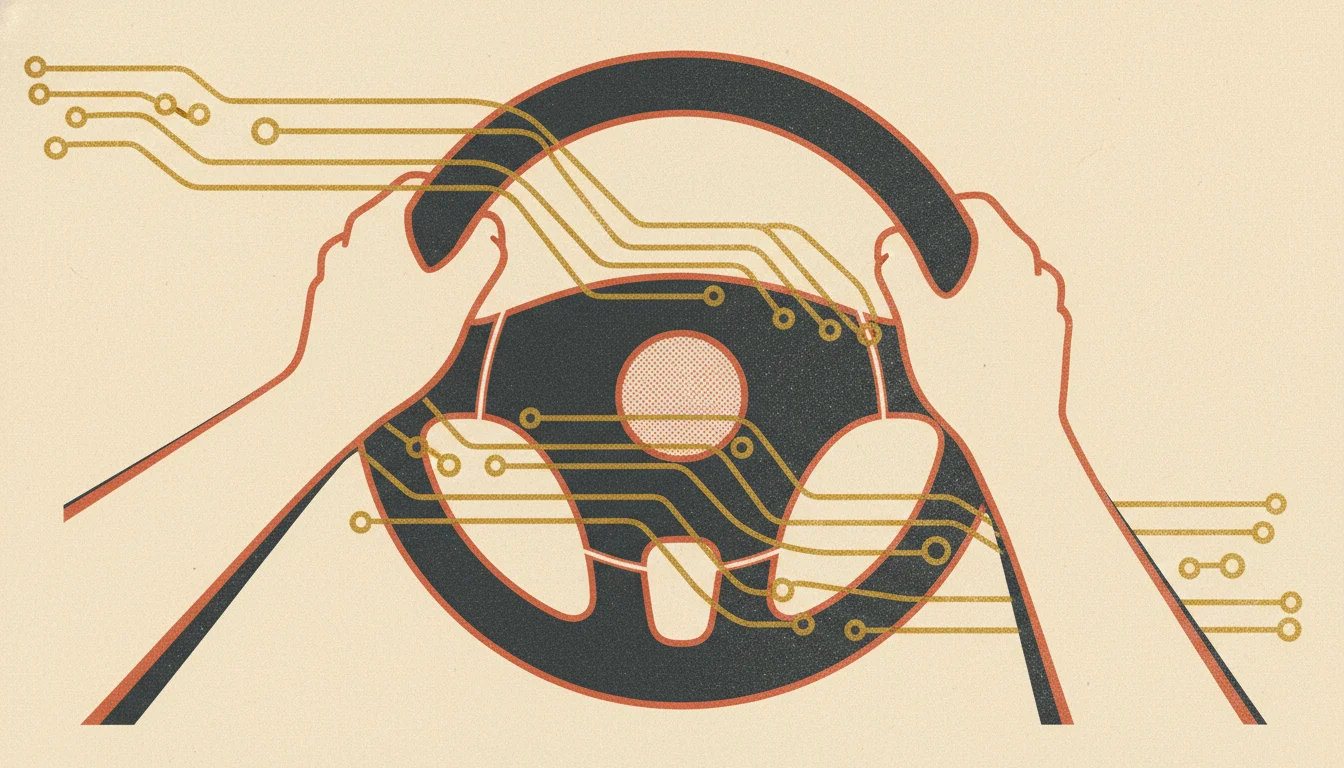
Here is a more mechanical example. Driving a truck used to take muscle. When power steering arrived, driving did not die; the need for muscle just dropped. But a softer wheel does not mean someone without a license can take that truck down a mountain road. AI is our power steering today: it tires the skilled driver less, and it sends the novice off the road.
There is also time. The most abundant resource used to be time; people could carve stone for years and bring out something lasting. Today it is the scarcest thing we have. Every minute you delay shipping your idea, someone on the other side of the world may be building the same one. That is AI’s real promise: what it gives back is time.
A Prediction: More Developers, Not Fewer
Above, I said standard, repetitive work will get automated. But unlike most people, I do not conclude from that “AI will take developers’ jobs.” What I see is not job loss, it is a shift in the role.
As AI makes building software cheaper, more software gets built. Thousands of small tools, internal systems, and automations that were never worth the cost suddenly make sense. Demand does not shrink, it widens. And someone has to hold the wheel on that work. So my prediction is not a gradual decrease but an increase: the need for developers who write fewer lines but give more direction, verify more, and hold the system together will keep growing.
There are a couple of places I have to be honest. The first is the cost of AI itself. Where the price of running it, the compute, tokens, and licenses, goes, who pays it, how pricing finally settles, that part is still foggy. Maybe it gets cheap and reaches everyone, maybe it stays expensive in the hands of a few giants.
The second, and we talk about it less: as the cost of producing software drops, where do developer salaries go? I can pull this both ways. On one side, as building gets cheaper more work appears, and demand for people who truly understand the work rises, which pushes pay up. On the other, the “AI already does it, you just manage it” framing can feed pressure to get the same work for less. Maybe both happen at once: the value and pay of standard work fall, while the value and pay of the person who carries the system rise. A kind of polarization.
I will not pretend to know any of this. The one thing I see clearly is that demand for developers who understand the work will rise. But the economics of that work, both the cost of the tool and the price of the person, has not settled yet.
Friend or Foe
I did not write this to romanticize “AI is your best friend, trust it.” The truth is, AI may not be your friend. It might be a cold competitor that pushes you out of your comfort zone and eyes your job.
But I am sure of this: it is not your enemy either. It is just a force standing there. Handing all your work over to it is one choice; using it as a single station, an accelerator inside your development loop, is another. In my team I built the second kind. Stop wasting time being hostile to it. How you use it, where you turn the wheel, is your call. But that vehicle is sitting in the garage, and your competitors already turned the key.
The Turkish version of this piece is here.