maker
Building Your Own Tool: The Art of Dodging Real Work While Looking Productive
September 22, 2026 · 6 min read
Building Your Own Tool: The Art of Dodging Real Work While Looking Productive
The Comfort of Hiding from Clients by Writing Code
Writers know this well. When Victor Hugo sat down to write The Hunchback of Notre-Dame in the autumn of 1830, he hit a brutal wall. His deadline with publisher Albert Gosselin was closing in. So Hugo locked every piece of clothing he owned inside a closet. He handed the key to his servant, draped a single grey wool shawl over himself, and shut the door. The only way to postpone invitations, meetings, and letters was to make leaving the room physically impossible. Hugo spent that winter without clothes, but the novel was finished on time.
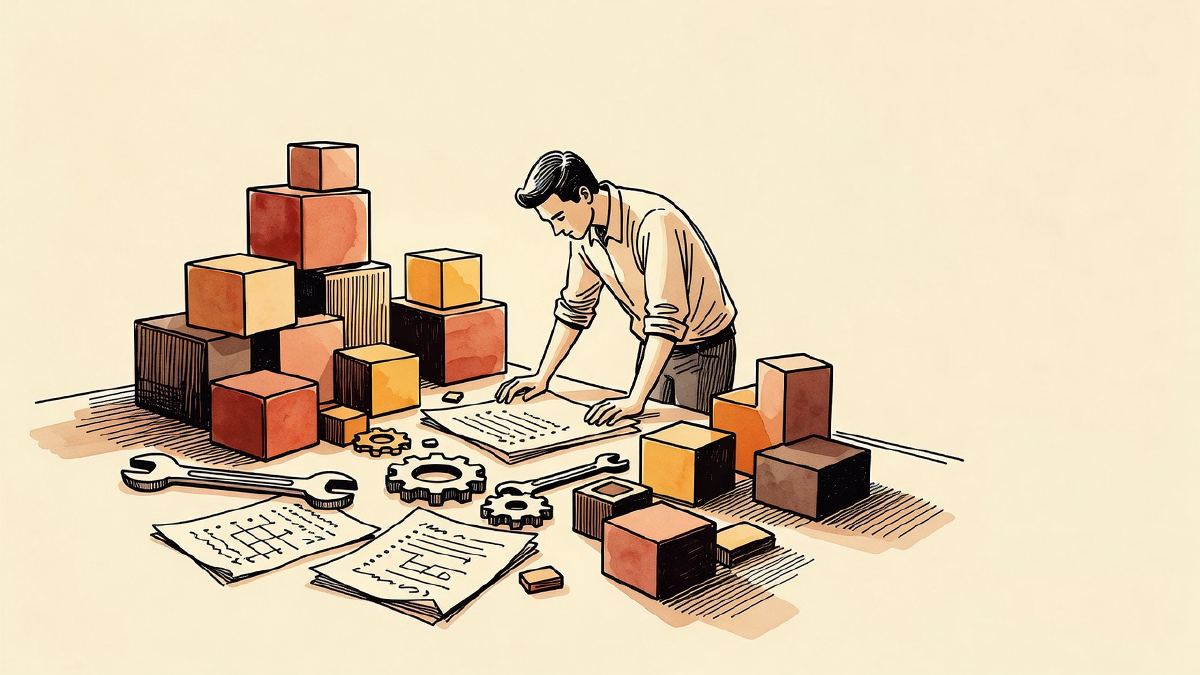
Modern developers don’t lock their clothes in a closet. They turn to the keyboard instead, writing code to build their own tools and avoid the real job. Building your own tool replaces the grey wool shawl for the developer.
In the software world, we call this fake productivity. Writing a script, cleaning up a database migration, or building a new command-line tool produces a tangible output. The commit is logged, the green test notification lights up the screen. The developer feels the satisfaction of a completed task. The other side of the coin is far less comfortable. For an independent developer or technical team lead, reaching out to potential clients, making sales, or writing marketing copy carries uncertainty. A sales call’s outcome can’t be controlled, and the risk of rejection runs high. The human brain picks the code editor — something it fully controls — over the frightening ambiguity of marketing work.
Look at weekly time sheets and this escape becomes obvious. A developer can spend three days writing a log formatting library just to postpone the market research they actually need to do. It doesn’t trigger guilt, because working code exists as proof.
Perfect Camouflage: Infrastructure Investments That Kill Guilt
In engineering, escape routes come loaded with legitimate justifications. Scrolling social media or playing games is unmistakable procrastination; the developer notices and feels bad. But building an internal tool or optimizing infrastructure gets framed as a technical necessity. The developer hides behind the excuse: “I need to get the system right first, then I’ll focus on sales.”
This leads somewhere dangerous. Cleaning up a codebase or setting up a new automation mechanism pushes aside the question of whether the actual product will find a market. When a developer ships a working prototype, they think the job is done. But technical preparation is not the path to the customer itself. Every hour spent writing code delays the confrontation with the uncertain outside world by one more day.
I can give an example from my own experience. While building the Seodisias project, I fell into a similar loop. At first I needed a simple mechanism to collect and analyze SEO data. That was a real requirement. But after the first version was done, I spent weeks rebuilding the architecture, optimizing database queries, and polishing the command-line interface. I was trying to push SQL query times down to the millisecond level for a system that only needed to scan two websites. Back then I told myself these improvements were necessary. Looking back today, I can’t honestly say how much of that effort served a real purpose and how much was a way to avoid the responsibility of putting the product in front of people. I’ll admit it: writing code has always been easier than making sales.
Red Lights in the Mirror: Five Signs You’re Kidding Yourself
To recognize when building your own tool has become an escape mechanism, you need to track specific signals. These are the red lights a developer should see when looking in the mirror.
First: only the author uses the tool, but updates never stop. Weekends spent changing terminal output colors, adding support for unused parameters, or pushing test coverage to one hundred percent are the tell. Spending a Saturday migrating a logging library from Winston to Pino, for example, is a desire to stay in the comfort zone. When there’s a single user and zero direct revenue from the tool, the work is just a distraction.
Second: a new technical prerequisite gets invented before every meaningful business step. “I need to finish this deployment script before I call the customer” or “I have to write a performance monitoring tool before I launch” — these sentences are familiar. The prerequisites never end because once one tool is done, another one appears. The goal is to push the actual, difficult launch moment further into the future.
Third: the truth hides in how time is distributed. A developer who spends forty hours a week writing internal libraries and only one hour on sales and customer outreach is not being honest with themselves. Time logs don’t lie. A developer who doesn’t track time becomes a fugitive wearing a productivity mask.
Fourth: new releases and refactor work overshadow the excitement of launching. If bumping a version number from one to two feels more thrilling than getting feedback from the first real user, you’ve lost your direction. Cleaning a codebase is safe. Meeting a customer is real.
Fifth: use cases are invented at a desk. The developer writes a list of problems the tool solves. But they haven’t talked to a single living person who actually faces those problems. The scenarios in the Readme are assumptions with no real-world counterpart.
The One Question on the Desk: Leverage or Defense Mechanism?
Some tools genuinely speed up work. A script that automates repetitive manual tasks or an integration that simplifies data transfer is real leverage. To make this distinction, write a single question on paper before every new development decision.
The real question is: without this tool, which job needed to get done today?
The answers reveal the truth. If the answer is “calling potential users, sending sales emails, or fixing a complex bug in the existing system” — and the developer chooses to write a new CLI tool instead, there’s a defense mechanism at work. Being constantly busy doesn’t mean getting things done. Every busy moment that doesn’t produce value is wasted time.
Building your own tool is a developer’s greatest strength. But using that strength as a shelter to delay hard decisions destroys productivity. Instead of stopping tool-building entirely, the developer should finish the hardest task at the top of the list before sitting down at the keyboard. The code can wait in the editor. The customer won’t.
Before writing a single new line of code today, look at your own time log and figure out which job you’re actually running from.